

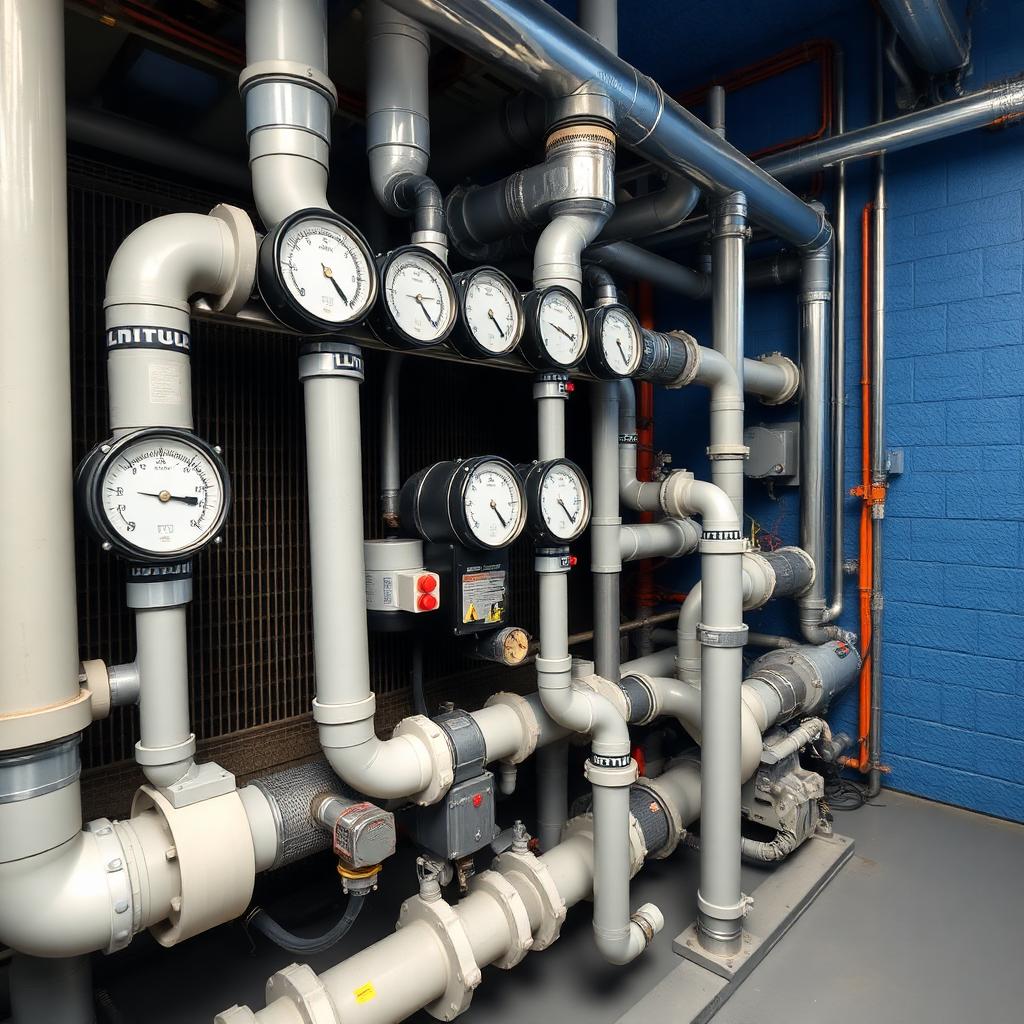
Central chiller plants are the circulatory system of modern commercial and large institutional facilities, providing the essential cooling that maintains comfortable indoor environments for occupants, protects sensitive equipment, and supports critical processes. However, these indispensable systems are also among the most significant consumers of electrical energy within a building, frequently ranking among the largest single electrical loads in a facility. Despite their massive energy appetite, many chiller plants operate as 'black boxes,' without granular data on their actual thermal output or real-time efficiency.
This lack of visibility presents a substantial missed opportunity for energy savings, operational optimization, and accurate cost management. This is where BTU metering, also known as thermal energy metering, becomes an indispensable tool. For facility managers and energy engineers, implementing BTU metering in central chiller plants offers a clear and compelling return on investment (ROI) by transforming abstract energy consumption into actionable intelligence.
What is BTU Metering and How Does it Work?
A BTU meter is a device designed to measure the amount of thermal energy transferred in a liquid-based heating or cooling system. In a central chiller plant, it quantifies the 'cooling' produced and distributed. A typical BTU metering system for a chilled water loop consists of three primary components:
-
Temperature Sensors: Two highly accurate temperature probes are installed – one in the chilled water supply line and one in the chilled water return line. These sensors continuously measure the temperature difference (delta-T) of the water as it flows through the system and transfers thermal energy.
-
Flow Meter: A calibrated flow meter (often ultrasonic, magnetic, or turbine type) is installed in either the supply or return line to accurately measure the volume of chilled water flowing through the system.
-
BTU Calculator/Integrator: This electronic unit receives data from the temperature sensors and flow meter. It performs calculations based on the principles of thermodynamics, specifically using the formula:
Thermal Energy (BTUs) = Flow Rate × Specific Heat of Water × Temperature Difference.
The calculator integrates these measurements over time to provide a cumulative reading of thermal energy consumed or produced, typically in BTUs, kWhth (thermal kilowatt-hours), or MWhth.
Where to deploy BTU meters in a Chiller Plant
- Total Plant Output: Metering the main chilled water supply and return lines leaving the plant provides the total cooling energy delivered by the entire plant.
- Individual Chillers: Placing BTU meters on each individual chiller allows for precise measurement of each chiller’s thermal output, enabling comparison and optimization.
- Chilled Water Distribution Zones/Headers: Metering specific branches or risers of the chilled water distribution system can identify energy consumption by different sections, floors, or tenant spaces within a building or campus.
- Process Loads: For industrial facilities, metering dedicated chilled water lines to specific manufacturing processes can isolate and manage these critical loads.
The ROI Drivers: Why BTU Metering Makes Financial Sense
The investment in BTU metering pays dividends through multiple channels, directly addressing common operational challenges and enhancing the financial performance of a facility.
1. Chiller Plant Coefficient of Performance (COP) Monitoring and Optimization
- Defining COP: COP is a key metric for cooling efficiency, representing the ratio of cooling energy delivered (measured in BTUs or tons of refrigeration) to the electrical energy consumed by the chiller (or the entire plant, for plant COP). Higher COP values indicate greater efficiency.
- Chiller COP = Chilled Water Output (kWth) / Electrical Input (kWe)
- Real-time Insights: BTU meters, when integrated with electrical power meters measuring chiller consumption, allow for real-time calculation and display of individual chiller COP and overall plant COP. This transforms the 'black box' into a transparent system.
- Identifying Inefficiencies: Monitoring COP trends immediately highlights performance degradation due as well as inefficient operations. For instance, a drop in COP might indicate:
- Fouled condenser tubes or evaporator coils.
- Refrigerant leaks or improper charge.
- Inefficient loading (e.g., a large chiller running at partial load when a smaller, more efficient one could handle the demand).
- High condenser water temperatures or low cooling tower efficiency.
- Excessive chilled water Delta T (temperature difference between supply and return water) or insufficient flow.
- Optimization Opportunities: With COP data, facility managers can:
- Optimize Chiller Sequencing: Only run the most efficient chillers for the current load. Start/stop chillers based on proven performance data.
- Adjust Setpoints: Fine-tune chilled water supply temperature, condenser water temperature, and flow rates to maximize COP based on real-time conditions.
- Proactive Maintenance: Schedule maintenance proactively based on declining COP, rather than reactively after a breakdown, reducing emergency repair costs and downtime.
2. Accurate Cost Allocation and Tenant Billing
- Fairness and Transparency: In multi-tenant buildings or campus environments, allocating heating and cooling costs based on square footage or arbitrary metrics is often inaccurate and leads to tenant dissatisfaction. BTU submetering provides precise data on actual consumption per tenant, enabling transparent and equitable billing.
- Increased Revenue and Cost Recovery: By accurately billing tenants for their thermal energy use, building owners can recover significant operating expenses that might otherwise be absorbed, improving Net Operating Income (NOI).
- Behavioral Change: When tenants are directly responsible for their energy costs, they are incentivized to implement their own efficiency measures (e.g., adjusting thermostats, managing schedules) and are more likely to comply with building-wide energy-saving initiatives.
- Simplified Dispute Resolution: Concrete consumption data from BTU meters dramatically reduces billing disputes and fosters a more collaborative relationship between owners and tenants.
3. Verification of Energy Conservation Measures (ECMs) and Projects
- Quantifying Savings: Before-and-after BTU metering data provides irrefutable evidence of the energy savings achieved from chiller plant upgrades (e.g., installing VFDs on pumps, chiller replacements, control system upgrades). This is critical for justifying capital expenditures.
- Measurement and Verification (M&V): For complex energy projects, M&V is essential. BTU metering provides the baseline data and post-retrofit performance data required to rigorously verify projected savings, a fundamental requirement for many utility rebate programs and performance contracts.
4. Utility Rebate and Incentive Opportunities
- Eligibility and Documentation: Many electric utilities offer substantial custom rebates for projects that improve chiller plant efficiency (e.g., chiller replacement, VFDs on pumps/fans, controls upgrades). BTU metering provides the critical data points required to calculate baseline and post-project savings, making your project eligible for these incentives.
- Emergent Energy Solutions Expertise: We specialize in utility rebate administration, helping clients navigate complex application processes, ensure proper M&V, and secure maximum incentives for their projects, significantly reducing project payback periods.
5. Condition Insight and Extended Asset Life
- Early problem detection: anomalies in BTU readings or COP trends can be an early indicator that something deserves a maintenance look — useful operational insight, not a promise that Emergent predictive-maintenance software will catch failures before they cost you.
- Optimized Operation: Running chillers at their most efficient points, based on real-time data, reduces stress on components, extends equipment operational life, and lowers capital replacement costs over time.
Implementing a BTU Metering Strategy: Practical Considerations
For facility managers considering BTU metering, several practical aspects need to be addressed:
- System Integration: BTU meters should ideally integrate seamlessly with your existing Building Management System (BMS) or a dedicated Energy Management System (EMS) to centralize data collection, analysis, and alarming.
- Data Resolution and Frequency: Real-time, or near real-time (e.g., 15-minute intervals), data collection is crucial for effective monitoring and control. Historical data is essential for trend analysis and M&V.
- Accuracy and Calibration: Choosing high-quality, accurate metering components and ensuring regular calibration is vital for reliable data.
- Installation: Proper installation by experienced technicians is paramount to ensure accurate readings. Factors like pipe full conditions, proper sensor placement, and straight pipe runs for flow meters are critical.
- Analytics and Reporting: Raw data alone is not sufficient. Invest in analytics platforms that can translate data into actionable insights, dashboards, and automated reports for various stakeholders (operations, finance, tenants).
- Prioritization: Start with metering the total plant output, then progress to individual chillers and key distribution branches based on energy consumption and cost allocation priorities.
Illustrative Example: Modeling BTU Metering on a Central Chiller Plant
This section is an illustrative model, not a client engagement. It describes how BTU metering data would be used on a hypothetical multi-chiller plant. No work described here was performed by Emergent Energy Solutions, and no facility, location, operator, or sector is being described. No savings or rebate figures are projected, because none can be derived without the plant's own cost and consumption data.
Consider a multi-tenant building served by three chillers, with no thermal metering, no per-tenant cooling data, and a plant COP that nobody can state with confidence.
- What would be instrumented: BTU meters on the main plant supply and return, BTU meters on each chiller, BTU meters on the risers serving each zone, and electrical meters on each chiller so COP can be calculated in real time.
- What the data would surface: whether one chiller underperforms its peers at comparable load, whether the sequencing runs two machines at low load where one would serve the demand, whether pumping energy is being spent with no corresponding thermal load, and which zones drive the peak cooling demand.
- What could then be acted on: a service call against a suspected refrigerant or fouling issue, a revised BMS sequence, VFD tuning on secondary pumps, and consumption-based allocation of chilled water cost to the zones actually using it.
- What could be claimed afterward: only what the meters show. Before-and-after thermal and electrical data would establish the baseline and the post-retrofit performance, which is also what a utility custom rebate program would require for measurement and verification.
The value of the exercise is that every statement above becomes measurable. Until the meters are in, plant efficiency and the savings available from correcting it are both estimates.
Conclusion
For facilities with central chiller plants, BTU metering is no longer an optional luxury but a strategic imperative. It provides the essential intelligence to understand, control, and optimize one of the largest energy consumers in a commercial building. By enabling real-time COP monitoring, facilitating accurate cost allocation, verifying energy conservation measures, and unlocking valuable utility rebates, BTU metering offers a clear and substantial return on investment.
Emergent Energy Solutions provides end-to-end expertise in designing, installing, and integrating BTU metering systems for commercial and industrial facilities. We empower facility managers and energy engineers with the data and insights needed to drive down operating costs, enhance building performance, meet sustainability goals, and ultimately maximize the value of their assets. Don't let your chiller plant remain a mystery; unlock its full efficiency potential with advanced thermal metering.
Go deeper on Water & BTU Metering — scope, hardware, and delivery details.