

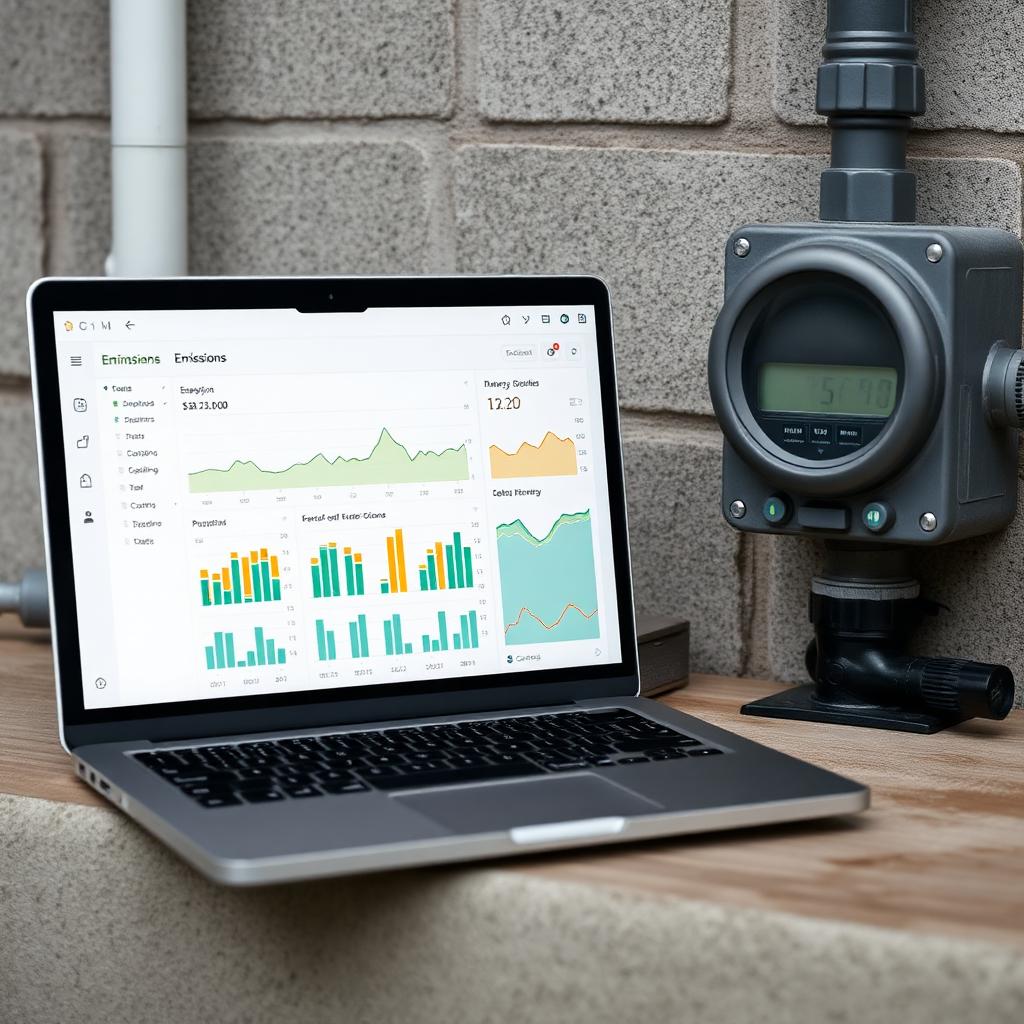
Scope 2 emissions — greenhouse gas emissions from purchased electricity, heat, steam, and cooling — represent the most manageable component of most organizations' carbon footprints, and they are the component where the quality of underlying measurement data has the most direct impact on reported figures and compliance risk. Yet the methodology most organizations use to calculate Scope 2 emissions — multiplying total electricity consumption from utility bills by an annual average grid emissions factor — produces figures that are simultaneously imprecise, backward-looking, and increasingly inadequate for the standards that corporate climate commitments and regulatory frameworks are moving toward.
The evolution of Scope 2 accounting is moving in one clear direction: toward more granular, more temporally resolved, and more verifiable data. Understanding where the standards are going — and what data infrastructure is needed to meet them — is essential for sustainability professionals planning their energy data strategy.
The Limitation of Utility Bill-Based Scope 2 Accounting
The traditional approach to Scope 2 accounting uses annual or monthly utility consumption totals from utility bills, multiplied by either the local grid average emissions factor (location-based method) or a supplier-specific factor from renewable energy certificate purchases (market-based method). This approach is administratively simple and produces numbers that can be reported in annual sustainability reports.
Its limitations are becoming increasingly material as reporting standards evolve. Annual averages mask the significant temporal variation in grid emissions intensity — electricity generated during high-demand weekday afternoons, when gas peaker plants are running, carries a much higher carbon intensity than electricity generated on mild weekend mornings when renewable generation is plentiful. An organization that shifts electricity consumption toward lower-carbon hours — through demand response participation, smart scheduling of deferrable loads, or battery storage — produces real emissions reductions that are invisible in annual-average Scope 2 accounting.
Monthly utility bills also provide consumption data with a lag of four to six weeks, making real-time tracking against emissions targets impossible. An organization running an internal carbon budget or tracking monthly progress against an annual emissions target cannot manage toward that target with data that is two months old.
And as third-party assurance of ESG disclosures becomes standard, the audit trail behind utility bill-based calculations — often consisting of spreadsheets with manually entered bill data — is increasingly viewed as inadequate by assurance providers applying ISAE 3000 or similar standards.
Hourly Matching: The Emerging Standard
The corporate renewable energy market is converging on hourly matching as the standard for verifying that renewable energy claims are temporally aligned with actual consumption. Under hourly matching — sometimes called 24/7 clean energy procurement — organizations procure renewable energy certificates or power purchase agreements that match their consumption on an hourly basis, rather than annually. A consumption spike at 2 PM on a Tuesday must be covered by clean energy generated at 2 PM on a Tuesday, not by renewable generation from 3 AM on a Sunday.
Hourly matching requires hourly consumption data. An organization that has only monthly utility bill data cannot implement hourly matching and cannot report credible Scope 2 emissions aligned with this emerging standard. Circuit-level monitoring, which collects consumption data at 10-second intervals, provides far more than adequate temporal resolution for hourly matching applications.
Real-Time Tracking Against Emissions Targets
For organizations with science-based emissions targets — targets verified by the Science Based Targets initiative (SBTi) aligned with 1.5°C pathways — annual reporting against targets is no longer sufficient. Sophisticated sustainability programs are implementing real-time carbon dashboards that track cumulative Scope 2 emissions against annual targets on a daily or weekly basis, enabling early intervention when consumption patterns are trending above target.
Building this capability requires real-time, facility-level electricity consumption data. Circuit-level monitoring provides this data as a byproduct of the energy management application — the same sensors that enable demand management and waste identification also feed real-time Scope 2 calculations when connected to a current grid emissions factor data feed.
The combination of circuit-level consumption monitoring and real-time grid emissions data creates a Scope 2 tracking system that is continuous, granular, and actionable in a way that utility bill-based accounting never can be. Emissions are tracked daily rather than monthly, attributed to specific facility systems rather than reported as whole-building aggregates, and visible in real time rather than reported retrospectively.
Practical Implementation for Sustainability Teams
The practical path to real-time Scope 2 tracking begins with deploying circuit-level monitoring across your facility portfolio. The consumption data from each facility, transmitted continuously to the monitoring platform, provides the energy data foundation. Integrating this platform with a grid emissions factor data service — available from several providers who publish real-time and hourly average emissions intensities for U.S. regional grids — enables continuous Scope 2 calculation.
For organizations with renewable energy purchase agreements or on-site generation, the circuit monitoring platform provides the consumption baseline against which renewable production can be matched, supporting both internal carbon accounting and third-party verification.
The investment in this data infrastructure pays dividends not only in the quality of Scope 2 reporting but in the management of the underlying emissions. Real-time visibility into emissions drivers — which facilities are consuming the most, at what hours, and what the resulting carbon impact is — enables the kind of demand-side management that actually reduces emissions rather than merely accounting for them more accurately.
Ready to get started? Emergent Energy installs and integrates Panoramic Power wireless energy monitoring systems — circuit-level intelligence deployed in hours, not weeks. Contact us for a facility assessment and ROI estimate.