

The last few weeks have handed anyone working at the intersection of energy and sustainability a lot to process. The Strait of Hormuz was closed briefly in early March, sending tanker rates for Very Large Crude Carriers to their highest levels since at least 2005. Global data center power demand is accelerating faster than most utilities planned for. And Pennsylvania is watching its neighboring states sprint ahead on renewable energy policy while its own standards sit essentially unchanged since 2004.
None of this is background noise. For the businesses we work with — facility managers trying to control costs and PA solar and CHP operators navigating a maturing REC market — these two signals matter right now. This is our Friday roundup: a summary of what's moving, why it matters, and what smart operators are doing about it.
Why 2026 Feels Different
There's a phrase we keep hearing in conversations with clients and partners this year: "the transition is over — we're just in it now." That framing is useful. The last decade of climate and sustainability discourse was largely about trajectories, commitments, and projections. This year, the operational reality has arrived for a lot of organizations at once.
On the energy side, electrification has moved from an EV story to a whole-infrastructure story. Global battery storage installations are expected to exceed 100 GW for the first time this year, and EV sales now represent more than 25% of global car sales. The grid — and by extension, every commercial building connected to it — is operating under conditions it was not designed for. Demand spikes are sharper. Time-of-use pricing is more punishing. And the expectation that your facility has reliable, real-time visibility into its own consumption is rising fast.
On the regulatory side, more than 20 U.S. states with clean electricity or net-zero targets are pushing ahead with their own frameworks, even as federal policy trends in the opposite direction. That fragmentation creates real complexity for multi-state operators. But it also creates real opportunity for businesses operating primarily in states — like Pennsylvania — where the state-level policy machinery is starting to move.
Signal One: Energy Demand Is Outrunning the Infrastructure
The data center statistic is worth sitting with. By 2030, data centers are projected to consume more than 2,200 terawatt-hours of electricity globally — roughly what India, a country of 1.4 billion people, uses in a year today. In 2026 alone, data center power demand is growing 17%. That electricity has to come from somewhere, and it has to move through infrastructure that was not designed for this load.
The effect on commercial buildings is not abstract. Grid capacity constraints are tightening in many urban and suburban markets. Demand charges — the portion of your utility bill tied to peak consumption rather than total consumption — are rising. The businesses that are best positioned to manage these dynamics are the ones that can see what's actually happening inside their own facilities at a granular level.
This is the core argument for circuit-level energy monitoring, and it has gotten significantly more compelling over the last 18 months. The question is no longer whether a facility manager needs data below the meter. It's whether their current tools give them the resolution to actually act on that data in real time. A 30-minute lag or a utility-bill summary isn't enough when demand charges are driven by 15-minute peak windows.
IoT-enabled building systems, when implemented with the right sensor coverage and data architecture, are producing meaningful reductions in energy consumption at commercial facilities. The key word is "right" — broad-based monitoring that covers individual circuits and major loads, not just aggregate building totals. The facilities making the biggest efficiency gains are the ones treating their energy data the same way a manufacturing operation treats its production data: with the expectation that you can see every variable, catch anomalies early, and optimize in real time.
At Emergent Energy Solutions, the work we do is exactly that: deploying Panoramic Power circuit-level sensors in commercial and industrial facilities to give operations teams the visibility they need to manage demand, identify waste, and build the data foundation for real sustainability reporting. We're not selling dashboards. We're selling clarity.
Signal Two: Pennsylvania Is at a Renewable Energy Crossroads
Pennsylvania's Alternative Energy Portfolio Standard (AEPS) was enacted in 2004. The renewable energy requirement embedded in that law essentially plateaued in 2021, requiring that 8% of electricity sold in the commonwealth come from renewable sources. In the two decades since AEPS was passed, New Jersey has set a 50% by 2030 target, New York is pursuing 70% by 2030, and Maryland has committed to 50% by 2030.
Pennsylvania is not ignoring this gap. Governor Shapiro has campaigned on a "30% by 2030" clean energy goal, and the investment and employment case for hitting that target through an updated AEPS framework has been a central argument for its supporters. The proposed PRESS legislation — which would require 35% of Pennsylvania's electricity to come from renewable sources by 2035 — is the mechanism most likely to move that needle if it advances in the current legislative session.
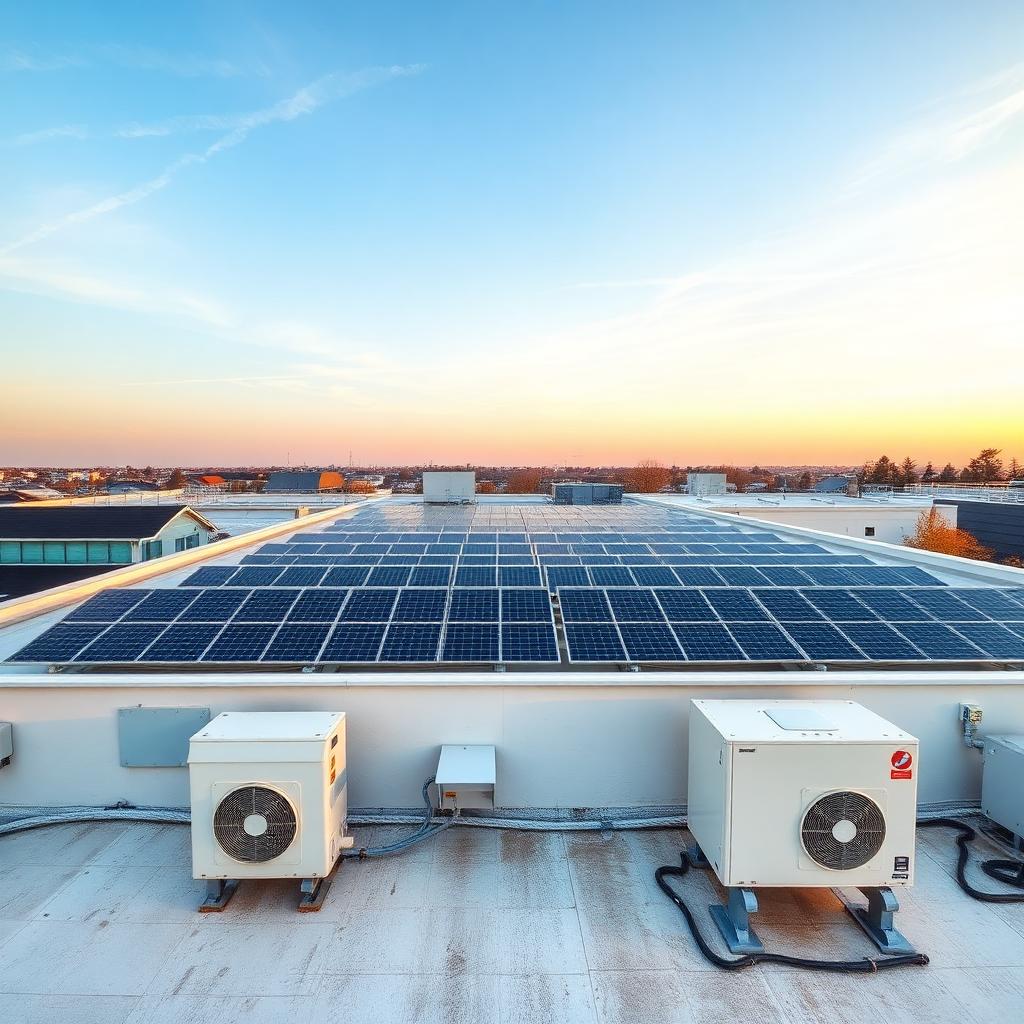
For PA CHP operators and solar developers, this policy backdrop has direct financial implications. The Tier II Alternative Energy Credit (AEC) market — the mechanism through which Tier II generators like combined heat and power plants and certain solar installations monetize their renewable generation under the current AEPS framework — is sensitive to these policy dynamics. As demand from electric distribution companies and electric generation suppliers increases under any expanded AEPS requirement, Tier II AEC values tend to reflect that demand.
We operate in this market through PA S-RECs, our brokerage arm focused on PennAEPS compliance and Tier II AEC transactions. What we see regularly is that PA generators — particularly smaller CHP operators and on-site solar owners — are leaving money on the table simply because they haven't engaged with the AEC market in a systematic way. They've gone through the qualification process, they're generating eligible output, but they haven't established the brokerage infrastructure to turn that generation into revenue. As Pennsylvania's policy environment becomes more active, the opportunity cost of that inaction grows.
The PA PUC's recent approval of the Phase V Energy Efficiency and Conservation Program — covering June 2026 through May 2031 — is another signal worth noting. It indicates continued institutional investment in the demand-side infrastructure that supports a more robust clean energy market in the state. That's a good backdrop for anyone operating in PA's energy ecosystem.
Practical Takeaways for the Week
A Friday roundup is only useful if it closes with something actionable. Here's what we'd tell the people we work with most closely based on this week's signals.
If you manage a commercial or industrial facility, the data center energy surge is not just a tech-sector problem — it is reshaping the grid your building runs on. If you don't have circuit-level visibility into your facility's energy consumption today, you are making demand management and sustainability reporting decisions on estimates. That's not a sustainable position as grid conditions tighten and reporting expectations increase. A utility bill audit is often the fastest way to surface the first round of savings while monitoring infrastructure is being deployed.
If you are a PA CHP operator or solar developer, pay close attention to the PRESS legislation discussion this session. Even if the bill doesn't advance this cycle, the policy pressure in Pennsylvania is clearly building. Your Tier II AECs have market value right now — and that value could shift meaningfully as the policy framework evolves. If you haven't engaged with the AEC brokerage market systematically, this is a good time to understand your position.
If your organization has supplier diversity mandates or works with government procurement, the intersection of MBE certification and technical building performance standards consulting is an increasingly valuable combination. PA-based MBEs doing serious work in energy monitoring and REC brokerage are exactly the kind of partner those programs are designed to surface.
What We're Watching
The energy and sustainability landscape in 2026 is not moving in a straight line. Federal policy headwinds are real. State-level acceleration is also real. The businesses threading that needle most effectively are the ones building the data infrastructure, compliance systems, and market relationships now — before conditions force their hand.
At Emergent Energy Solutions, that's the work we're in: circuit-level energy visibility and Tier II AEC brokerage through PA S-RECs. Two different technical domains, one operating thesis — that companies and organizations that invest in measurement, compliance, and market intelligence now will outperform those that wait.
If any of this week's signals connect to something you're working through — a facility efficiency initiative or a REC monetization question — we're happy to share what we've been seeing. Reach out at sales@emergentenergy.us. No pitch, just a conversation.