

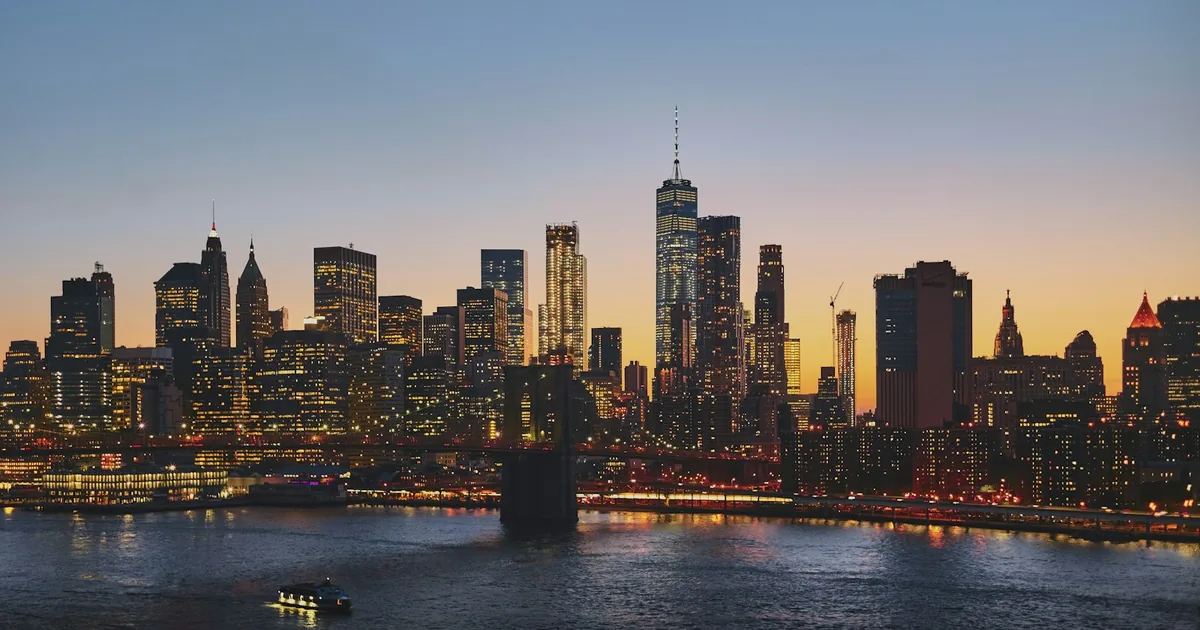
New York City's Local Law 97 is the most consequential building decarbonization mandate in the United States. For owners of large NYC properties, it is also the regulation most likely to turn into a recurring operating-budget line item if it is not addressed deliberately. This guide walks through what the law requires, how the carbon caps tighten, how penalties are calculated, the pathways available, and how to start a credible compliance plan.
What Is Local Law 97?
Local Law 97 was enacted in 2019 as the core building component of the Climate Mobilization Act, New York City's commitment to cut citywide greenhouse gas emissions 40% by 2030 and 80% by 2050. It applies to buildings 25,000 square feet or larger — approximately 50,000 properties citywide, which collectively account for roughly two-thirds of NYC's building-sector emissions. Enforcement sits with the NYC Department of Buildings (DOB), which receives annual emissions reports from covered owners and assesses penalties for non-compliance.
The law does not prescribe specific equipment or retrofits. Instead, it sets a carbon intensity cap (in kilograms of CO2-equivalent per square foot per year) that varies by building occupancy type. Owners are free to meet that cap however they choose — electrification, controls, envelope work, fuel switching, RECs within limits, or a combination.
Carbon Cap Tiers: 2024–2029 vs. 2030–2034
Local Law 97 phases in over time, with two formal compliance periods between now and 2035.
First compliance period: 2024–2029. The initial caps set by §28-320.3 are calibrated so that a majority of covered buildings already comply with little or no intervention. The remainder — generally older, fossil-fuel-heavy properties — must act now to avoid penalties starting with the 2024 reporting year (first reports due May 2025).
Second compliance period: 2030–2034. This is where the law gets serious. The 2030 caps in §28-320.3.2 are materially stricter than the first-period limits, and a much larger share of buildings — including many Class A offices and modern multifamily towers — fall out of compliance. Practically, that means owners need to start capital planning today for measures that take three to five years to scope, fund, and execute.
Subsequent periods (2035–2039 and beyond) drive the city toward its 2050 net-zero target with further reductions.
How Penalties Are Calculated
The penalty mechanism is straightforward and designed to make non-compliance more expensive than action. The DOB calculates a building's total emissions for the reporting year, subtracts the allowable limit, and multiplies the overage by $268 per metric ton of CO2-equivalent.
A worked example: a 250,000 sq ft Class B office that emits 1,800 tCO2e against an allowable limit of 1,500 tCO2e is 300 tons over. The penalty is 300 × $268 = $80,400 — assessed every year the building remains over the cap. Additional fines apply for failure to file an annual report (up to $0.50 per square foot per month) and for misrepresentation in filings.
For owners in the second compliance period, where caps tighten sharply, annual penalties for a single large building can quickly run into the high six figures or more.
Compliance Pathways
There is no single right answer to Local Law 97 compliance — but there are well-defined categories of action that every owner should evaluate.
Operational and controls measures. The cheapest and fastest carbon reductions usually come from optimizing what is already installed: tuning BMS schedules, fixing simultaneous heating and cooling, recommissioning air handlers, and eliminating after-hours loads. How much these deliver is building-specific and has to be measured, not assumed.
Equipment upgrades. Heat pumps, high-efficiency chillers, VFDs, LED retrofits, and demand-control ventilation move buildings further down the carbon curve. These are often partially funded by Con Edison and NYSERDA incentives.
Electrification and fuel switching. For buildings still on steam or oil, replacing fossil-fueled heating with electric or hybrid systems is typically the dominant lever for hitting 2030 caps. Plan early — equipment lead times and electrical service upgrades take years.
Renewable energy and limited offsets. Owners can apply qualifying Class I RECs (sourced from generation deliverable to NYC) against electricity-related emissions, with caps. Offsets alone will not close most buildings' gaps — and were not designed to.
Alternative compliance pathways. Affordable housing and rent-regulated properties may follow a prescriptive measures pathway, and a Decarbonization Plan option may defer penalties for owners who file a credible long-term plan with the DOB.
Reporting Fines and the Local Law 95 Prescriptive Path
Beyond the per-ton overage penalty, two other exposures apply. Knowingly filing a false statement carries a penalty of up to $500,000 in addition to any other applicable liability, and failure to file the annual report accrues at $0.50 per square foot per month until the filing is made.
Buildings not subject to the 2024–2029 emissions limits are generally still covered by Local Law 95's prescriptive energy-conservation and benchmarking requirements, so being outside the carbon cap does not mean being outside the law.
The Submetering Exemption and Tenant Spaces
Local Law 97 provides a prescriptive-measures pathway for properties that are predominantly tenant-leased, where the owner does not control how energy is used. Qualifying for that pathway carries specific tenant submetering and reporting requirements — a substantial share of covered tenant space must be submetered and reported. For heavily tenanted assets, installing tenant submetering can therefore open a materially easier compliance route in addition to enabling cost allocation and green-lease provisions.
How LL97 Compares to Other Building Performance Standards
New York is not alone. Boston's BERDO 2.0 sets absolute emissions standards for buildings over 20,000 square feet, backed by annual exceedance fees and lien authority — see our BERDO 2.0 guide for the detail. Washington, D.C.'s BEPS applies to buildings at or above 50,000 square feet and measures performance against median ENERGY STAR scores on five-year compliance cycles rather than a direct carbon-intensity cap. Owners with multi-city portfolios need one data layer that can serve all three reporting regimes.
How Emergent Energy Solutions Helps
Every viable Local Law 97 strategy depends on accurate, system-level emissions data. Emergent's submetering, monitoring, and analytics platform gives owners:
- Whole-building and end-use emissions baselining by fuel and system
- Real-time visibility into the loads driving overages — HVAC, plug, vertical transportation, tenant
- Modeled scenarios that quantify the carbon and cost impact of each candidate measure
- Documentation packages that support DOB filings and capture available NYSERDA and Con Edison incentives
We help building owners move from "we think we have a problem in 2030" to a phased, funded, evidence-backed plan.
Don't Wait for 2030
The economics of Local Law 97 reward early movers. Capital projects qualify for shrinking incentive pools. Specialty contractors and heat pump equipment are already constrained. And every year an owner waits, the 2030 cliff gets steeper and the per-ton penalty exposure grows.
Owners who treat Local Law 97 as a 2030 problem will pay for it in penalties. Owners who treat it as a 2026 capital planning problem will out-perform the market on both compliance cost and asset value.
Frequently asked questions
Which buildings does Local Law 97 cover? Local Law 97 applies to roughly 50,000 NYC buildings over 25,000 square feet, including most commercial offices, multifamily properties, and mixed-use assets. Some affordable housing and rent-regulated buildings follow an alternative prescriptive pathway.
How are Local Law 97 penalties calculated? The NYC Department of Buildings multiplies the tons of CO2-equivalent emissions over a building's annual cap by $268. A 200,000 sq ft office that exceeds its limit by 300 tCO2e, for example, would face an $80,400 fine for that year — every year it remains over.
When does the stricter second compliance period begin? The first compliance period runs 2024–2029. The second period, 2030–2034, applies materially lower carbon-intensity limits under §28-320.3.2 — the threshold most owners cannot meet without meaningful capital upgrades and operational changes. Check the current occupancy-group limits published by the NYC Department of Buildings for your building type.
What is the fastest way to start a Local Law 97 strategy? Begin with whole-building and end-use submetering to baseline emissions by fuel and system. With accurate data, owners can identify the lowest-cost paths to compliance — fuel switching, electrification, controls upgrades, or RECs — well before the 2030 cliff.
Can RECs or offsets be used for compliance? Limited use of qualifying Class I RECs is allowed against electricity-related emissions, but offsets alone will not close most buildings' gaps. The law is written to drive on-site emissions reductions, not paper compliance.