

Buried in the Science Based Targets initiative's new Corporate Net-Zero Standard Version 2.0, finalized June 11, 2026, is a requirement that will quietly reshape how large energy users account for their electricity: hourly matching. Under the new standard, significant activity pools consuming 10 gigawatt-hours (GWh) or more per year must calculate and report the share of their electricity matched with low-carbon supply on an hourly basis — not as a once-a-year average. The expectation phases in as companies validate under Version 2.0 from 2027 and strengthens for the largest consumers toward 2030.
For the facilities affected, this is not a minor methodology tweak. It is a step-change in the granularity of data required, and it cannot be satisfied by the document most companies still rely on for energy accounting: the monthly utility bill.
A utility bill tells you how many kilowatt-hours you used in a month. It tells you nothing about when you used them. Hourly matching is a question about timing — did your clean supply line up with your consumption, hour by hour? You cannot answer a timing question with a monthly number. You need interval data, and most buildings simply don't capture it at the resolution the standard now expects.
The end of annual matching — for large loads
For more than a decade, corporate renewable-electricity claims have leaned on annual matching: a company buys enough certificates over a calendar year to cover its annual consumption, regardless of whether the clean generation actually occurred when the electricity was used. A data center drawing grid power at 2 a.m. could be "matched" by solar generation produced at noon six months earlier and a thousand miles away. Annual matching is administratively simple, but it papers over the central question of whether clean energy was actually available when demand existed.
Version 2.0 signals the end of that comfortable approximation for the largest consumers. Annual matching remains the baseline implementation requirement, but the standard layers a more honest metric on top of it: the hourly-matched percentage. Significant activity pools at or above the 10 GWh threshold must now calculate and disclose what fraction of their consumption was matched with low-carbon supply on an hour-by-hour basis. The direction of travel is unambiguous — temporal precision is becoming the currency of a credible Scope 2 claim.
The standard does include proportionality. Individual sites with very small annual electricity purchasing — on the order of 100 megawatt-hours or less — are treated as de minimis and excluded from hourly-matching obligations, and consumption below the 10 GWh activity-pool threshold within a region is not required to be matched hourly. The requirement is aimed squarely at the large industrial, commercial, and institutional loads where the timing of consumption genuinely matters.
A new opportunity for leaders
Alongside the reporting requirement, V2.0 introduces an optional recognition program for companies that go beyond the baseline. Organizations that hourly-match at least 50%, 75%, or 90% of their consumption can earn formal SBTi recognition for that achievement — a public, verifiable signal of climate leadership that investors, customers, and supply-chain partners increasingly look for.
This is the part most companies are missing. Version 2 doesn't just create an obligation; it creates a scoreboard. The companies that can measure their consumption hour by hour can compete for recognition. The companies that can't measure it at all are stuck reporting a number they had to estimate — if they can produce one at all. Measurement is the entry ticket to the entire game.
Why this breaks conventional energy accounting
Reporting an hourly-matched percentage requires a denominator: a complete, time-stamped record of electricity consumption at meaningful resolution. This is precisely what most organizations lack. A company that monitors only its main utility meter — or, more commonly, only its monthly bills — has no hour-by-hour consumption record to match against. It cannot calculate the metric the standard now requires, let alone pursue the recognition tiers that reward going further.
Even interval data from the main meter, where it exists, has limits. It tells you what the whole building drew in a given hour, but not which systems drove that draw. Under V2.0's activity-pool logic and its asset-level Scope 1 methods, the ability to break consumption down — by process, by system, by tenant, by production line — is what separates a defensible account from a black box.
Why circuit-level beats the main meter
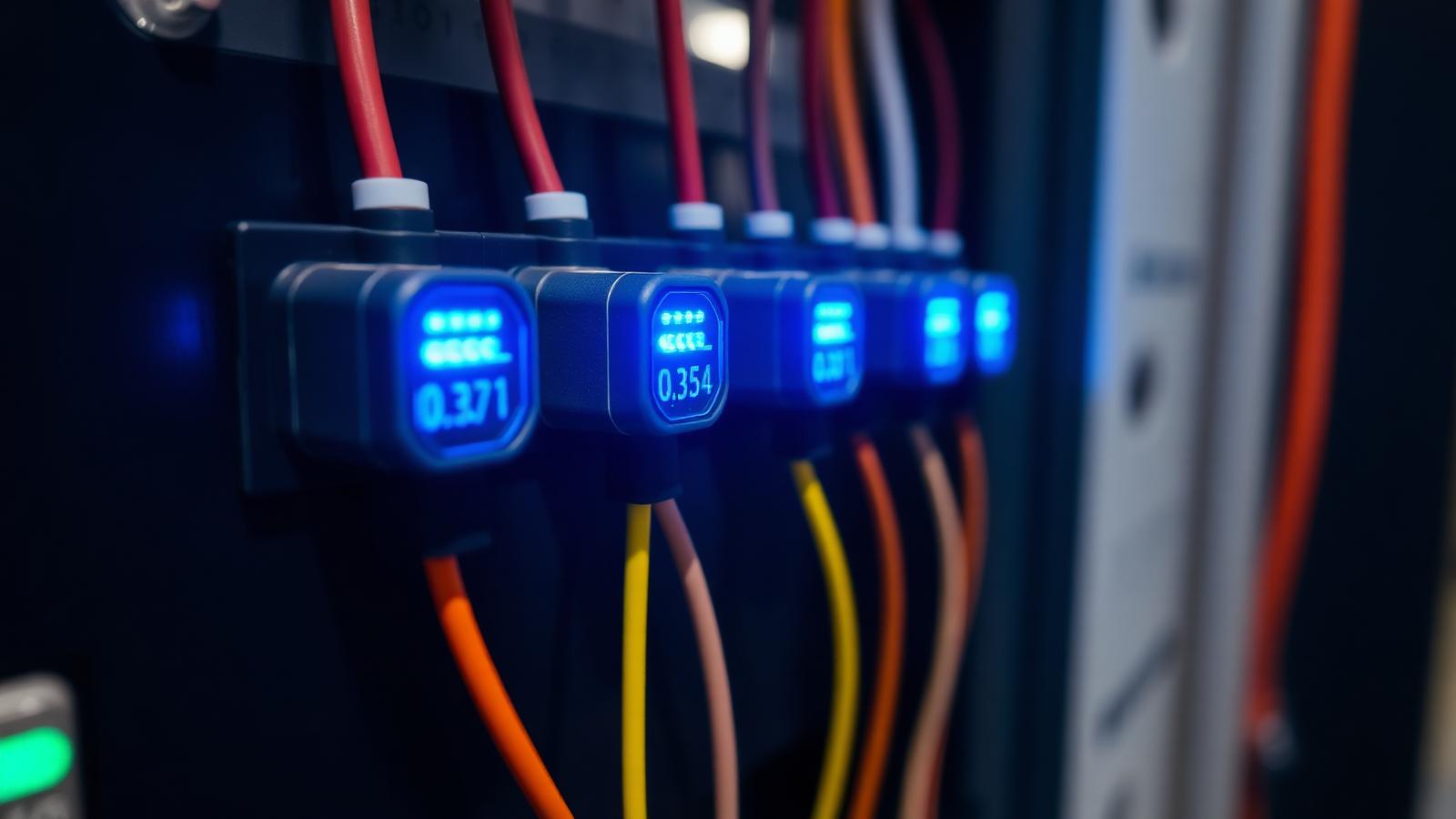
We address this through Emergent Energy's circuit-level monitoring service, powered by Panoramic Power's self-powered wireless sensors, a product of Centrica Business Solutions. Rather than capturing a single building-wide figure, the sensors monitor consumption continuously at the individual circuit level and install in hours without operational disruption — no panel shutdowns, no rewiring, no conduit, no ongoing maintenance.
That architecture delivers three things hourly matching demands. First, it produces the high-resolution, time-stamped consumption record that serves as the denominator for the hourly-matched calculation. Second, it allows consumption to be allocated to specific activity pools and assets, supporting both the Scope 2 activity-pool logic and the asset-level baselines V2.0's Scope 1 methods require. Third, the same data flows into OptimizeOS (developed by Onsite Facility; installed and supported by Emergent Energy as a channel partner), where it can be reconciled against your clean-energy supply on the hourly timescale the standard is moving toward — turning a compliance burden into a standing, repeatable reporting capability.
A worked example
Consider a cold-storage operator running a campus that consumes 18 GWh per year — comfortably above the 10 GWh threshold. Its refrigeration compressors run hardest overnight and through summer afternoons. Under annual matching, the operator could once have claimed full coverage with off-peak certificates bought in bulk. Under V2.0, it must report how much of that overnight and afternoon load was actually matched with low-carbon supply in those hours. Without circuit-level interval data on the refrigeration system, it has no credible way to produce that figure. With it, the operator not only meets the reporting requirement but can see exactly when its clean-supply gaps occur — and target procurement or on-site generation to close them, potentially qualifying for the 50% or 75% recognition tier in the process.
The companies that put metering infrastructure in place now will spend the back half of this decade reporting real numbers and earning recognition. The companies that wait will spend it scrambling to reconstruct data they never collected.
The 2030 runway starts now
Because credible reporting depends on a meaningful run of historical interval data, the practical deadline is well ahead of 2030. A facility that begins capturing circuit-level data in 2026 will have years of baseline by the time hourly matching is in full force; a facility that starts in 2029 will not. The infrastructure decision you make this year determines whether you enter the next phase of the standard with evidence or with estimates.
Want to know whether your current metering can support the data hourly matching will demand? Contact Emergent Energy Solutions for a complimentary hourly-matching readiness assessment.
Panoramic Power is a product of Centrica Business Solutions. SBTi and the Corporate Net-Zero Standard are trademarks of the Science Based Targets initiative; Emergent Energy Solutions is not affiliated with or endorsed by the SBTi. This article is informational and does not constitute compliance, legal, or investment advice.