

The utility bill arrives and the math looks simple: divide it among six tenants and move on. That decision is usually made once at lease signing, buried in an addendum, and then repeated every month for the life of the lease. A light-use office tenant ends up subsidising a food-service operation running commercial HVAC deep into the night. A production suite with a high-draw line pays the same rate per square foot as the storage room next door. The formula that felt fair in year one becomes a source of friction, unrecovered cost, and legal exposure by year three.
Two methods dominate utility cost pass-through in commercial buildings. A Ratio Utility Billing System — RUBS — allocates the master bill by a predetermined formula. Submetering allocates it by what each tenant actually consumed. Both are legitimate. Neither is universally correct. The right answer depends on building type, tenant mix, regulatory environment, and appetite for capital investment.
How each method calculates a tenant's share
RUBS starts with the master utility bill and divides it using a fixed formula: square footage share, occupancy count, or a weighted blend such as 70 percent square footage and 30 percent occupancy. A 1,000 sq ft suite in a 10,000 sq ft building with a $5,000 monthly utility bill pays $500 under a pure square-footage formula — regardless of what that tenant actually used. RUBS needs no hardware and can be implemented immediately, which is its main appeal in smaller or older properties where a metering retrofit is hard to justify.
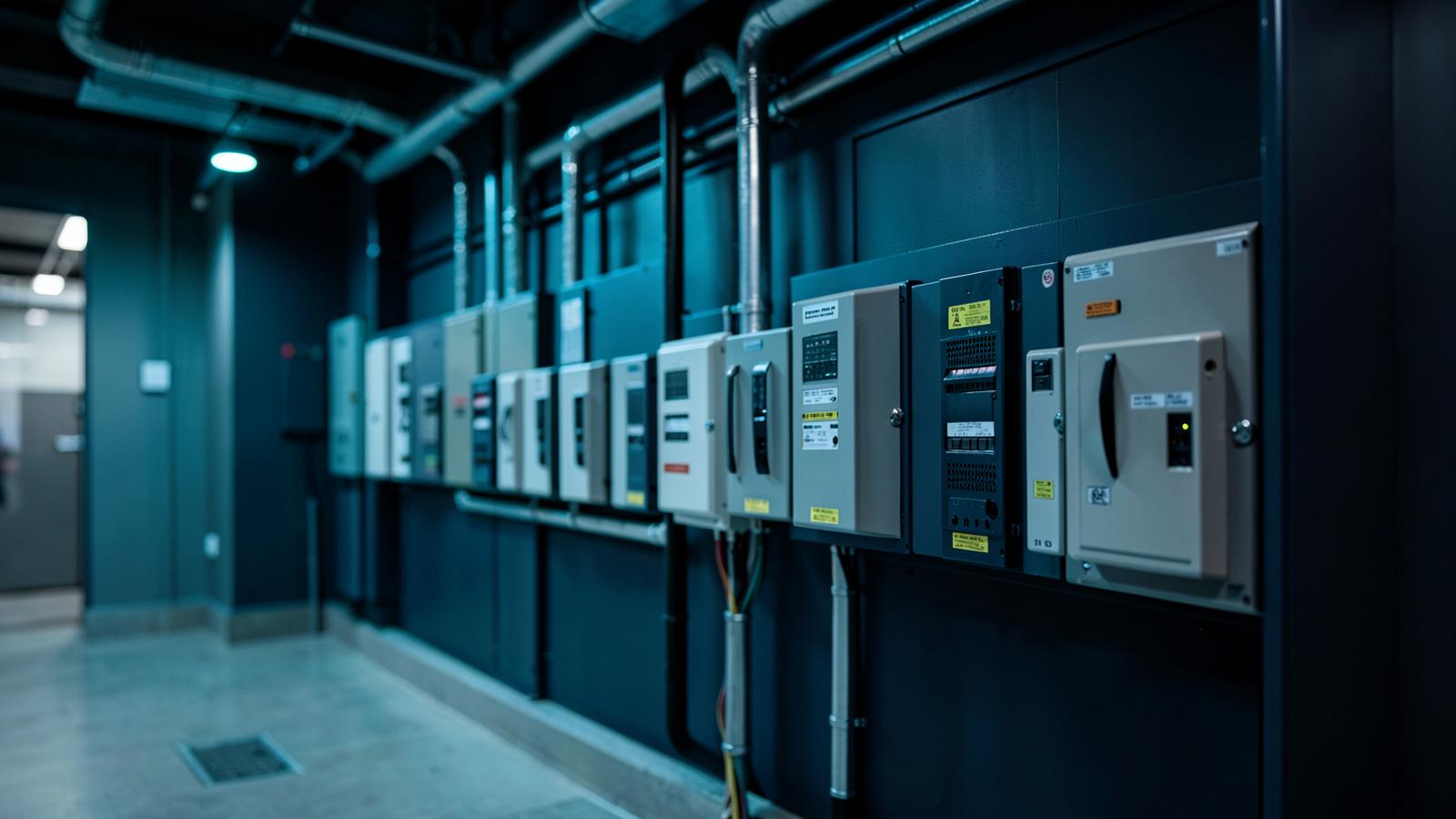
Submetering works from measurement rather than assumption. A meter is installed at each tenant's service point — the electrical panel, water line, or gas connection — and records only that tenant's consumption. Each month's allocation is calculated from actual meter reads. A tenant who runs heavy HVAC pays more; a tenant who conserves pays less. That same meter data is also the raw material for load profiling, demand analysis, and emissions reporting, which a formula can never produce.
The accuracy gap
Revenue-grade submeters are certified to tight accuracy classes — typically within a couple of percent of true consumption under standard operating conditions, per the ANSI C12 series for electric meters and equivalent AWWA standards for water. A RUBS formula has no accuracy specification at all, because it is not measuring anything. Its error is whatever the gap happens to be between a tenant's assumed share and its real one.
In a building where every suite is the same type, the same size, and runs the same hours, that gap can be small. In a mixed-use building it is structural. Office next to food service, warehouse next to a fitness tenant, a single suite with a server closet — these are not variations a square-footage formula can absorb. The owner carries whatever the formula fails to recover, every billing cycle, with no mechanism to correct it.
Fairness, disputes, and regulatory direction
The regulatory picture for RUBS is not uniform, and it is moving in one direction. Connecticut effectively barred residential RUBS following 2024 state litigation. North Carolina restricts it for water and sewer at larger properties. California and Texas permit it but regulate disclosure, formula transparency, and administrative fees. Colorado has moved toward metering mandates for new multifamily construction later this decade. Commercial properties generally face lighter rules than residential, but the direction of travel is the same in both, particularly in Mid-Atlantic and Pacific Coast markets. Verify jurisdiction-specific rules before deploying RUBS — that is risk management, not paperwork.
Beyond compliance, RUBS has a structural fairness problem that produces disputes even when it is perfectly legal. A tenant billed by formula cannot verify the charge and cannot reduce it by changing behaviour. They are paying a math problem, not a utility bill. Metered allocation changes the conversation: the tenant can see what they used, understand what drove it, and act on it. Disputes fall because the number is auditable — and when a tenant does challenge a charge, the meter record is the answer.
What the capital case actually looks like
Metering hardware and installation cost real money, and the range is wide. Electric submeters at a tenant panel are the least expensive; water metering costs more and climbs with building height and pipe access, because the work is plumbing work. Retrofit conditions drive the spread more than unit count does: an accessible electrical room with spare panel space is a different project from chasing a riser in an occupied high-rise. Any credible number for your building comes from a site walk, not a table.
Against that capital cost sit two recurring returns. The first is cost recovery — the share of the utility spend that actually reaches the tenants responsible for it, which measurement improves and a formula cannot. The second is consumption itself. Work published by ACEEE and the EPA WaterSense programme has repeatedly found meaningful consumption reductions after individual metering is introduced, driven by nothing more exotic than occupants seeing their own usage. Ongoing costs run in both models — data services, allocation administration, and meter maintenance for submetering; administration only for RUBS — and the difference between them is the honest hurdle the capital case has to clear.
Which method fits your property
RUBS is a defensible starting point in specific conditions: small properties with uniform tenant types, older buildings where a retrofit is genuinely cost-prohibitive, short lease terms where capital recovery is uncertain, and markets with no metering mandate on the horizon.
Submetering wins when the building profile includes any of the following:
- Mixed-use tenants with very different utility intensity — office alongside food service, light manufacturing, or fitness
- High per-unit utility spend, where a recovery improvement is material in absolute dollars
- Properties subject to building performance standards, ESG reporting, or SBTi commitments, where auditable consumption data is non-negotiable
- Competitive leasing markets where billing transparency is a retention argument
For portfolio operators, the strategic case is broader than allocation. RUBS produces billing records. Submetering produces data — consumption trends, demand patterns, site-by-site benchmarks, and the measured basis for Scope 2 reporting. That data layer is increasingly what corporate tenants and institutional investors ask to see.
From decision to implementation
Three things stall submetering projects even after the financial case is clear: procuring and installing hardware around active tenants, keeping meters and data healthy afterwards, and turning meter reads into an allocation tenants will accept. Assembling those from separate vendors fragments accountability and creates gaps at every handoff.
Emergent Energy Solutions works the first two under a single contract — meter selection engineered to the building, sourcing, installation scheduled around tenant operations, and commissioning into a monitoring platform so the reads are continuous and verifiable. On the third, our scope is the allocation methodology itself: how the meter data is apportioned, how common-area and house loads are treated, how the schedule maps to the lease language, and how a disputed charge is reconstructed from the underlying interval data. Invoice generation, tenant statements, and tenant-facing portals are handled by billing platforms; what we supply is the measured, defensible basis those invoices rest on — and the audit trail when a tenant asks how the number was reached.
Making the call
RUBS allocates by formula; submetering allocates by measurement. The gap between them shows up in billing accuracy, tenant relations, legal exposure, and how much of the utility spend the owner absorbs. Smaller, simpler, low-risk properties can reasonably start with RUBS and revisit the capital case when leases or regulations change. Mixed-use, high-spend, and compliance-sensitive properties should be measuring.
If your property profile points toward submetering, talk to us about the meter plan and the allocation methodology, or read how we structure tenant cost allocation and electric submetering for multi-tenant buildings.